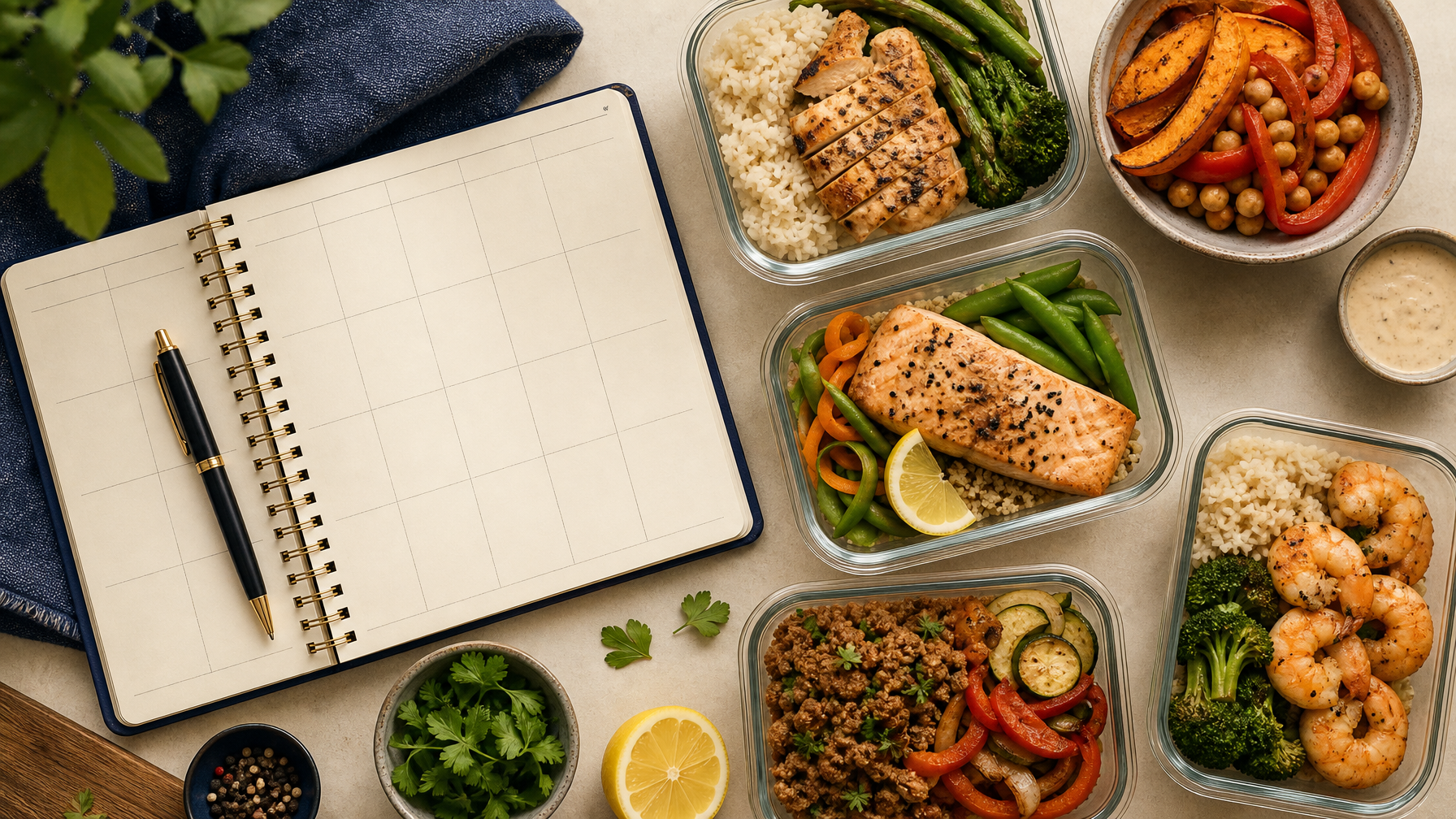
Description
A step-by-step beginner's guide to meal planning from a professional chef – covering the 5-step system, common mistakes to avoid, and how to plan a full week of meals in under 10 minutes.
Meal Planning for Beginners: How to Plan a Full Week of Meals in Under 10 Minutes
#TLDR: Meal planning sounds like a chore. It isn't. A five-step system – decide, check, list, prep, cook – takes under 10 minutes on a Sunday and eliminates the daily "what's for dinner?" spiral entirely. The key is starting simple and building consistency before building complexity.
Table of Contents
- Why most people fail at meal planning
- The 5-step beginner meal planning system
- What to meal plan first (and what to skip)
- How to build a shopping list that actually works
- Batch cooking: the one habit that changes everything
- Common meal planning mistakes and how to fix them
- How AI makes meal planning effortless
Why Most People Fail at Meal Planning {#why-people-fail}
Most people try meal planning, stick to it for one week, then abandon it entirely. The reason is almost always the same: they start too ambitiously.
They plan every meal – breakfast, lunch, dinner, snacks – for seven days. They spend two hours on Sunday cooking. They prep six different things. By Wednesday, life intervenes. By Friday, the carefully prepped food has gone to waste. By Saturday, they've decided meal planning "doesn't work for them."
It wasn't meal planning that failed. It was the scope.
Start with three or four dinners. Nothing else. Once that's consistent, add lunches. The system builds on itself – but only if the first step is small enough to stick.
The 5-Step Beginner Meal Planning System {#5-step-system}
Step 1: Decide on 3-4 Dinners
Pick three or four recipes for the week. Not seven. Three or four.
This gives you cooking nights and intentional leftover nights built in. A batch of Moroccan chicken on Monday becomes Tuesday's lunch. Wednesday's lentil soup stretches to Thursday.
At FlavourFrontier, this step takes 60 seconds. Select your mood, your dietary preferences, and hit Inspire Me. You get recipe ideas instantly, tailored to your actual vibe for the week.
Step 2: Check What You Already Have
Before writing a shopping list, scan the fridge, freezer and cupboards. You almost certainly have onions, garlic, olive oil, canned tomatoes, dried pasta, rice, and at least one protein that needs using.
Step 3: Write Your Shopping List (by section)
Once you know what you need, write the shopping list grouped by supermarket section: produce, proteins, dairy/eggs, tins and dry goods, frozen.
FlavourFrontier generates the shopping list automatically from your selected recipes – sorted and ready to screenshot before you leave the house.
Step 4: Do One Prep Task on Sunday
Not two hours of batch cooking. One task.
- Cook a big pot of grains (rice, quinoa, lentils) that works across multiple meals
- Or roast a tray of vegetables that goes into lunches and dinners all week
- Or marinate a protein so Monday's dinner is ready to cook
Step 5: Cook (and Let the Plan Do the Work)
With your recipes chosen, ingredients bought and one prep task done, weeknight cooking becomes execution rather than decision-making.
What to Meal Plan First (and What to Skip) {#what-to-plan}
Start with: Dinners only.
Add next: Lunches – plan for leftovers rather than separate lunch recipes.
Add later: Breakfasts.
Skip entirely (at first): Snacks.
How to Build a Shopping List That Actually Works {#shopping-list}
A good shopping list has four properties:
- Complete – includes everything needed for every recipe
- Organised – grouped by store section
- Realistic – accounts for what you already have
- Portable – on your phone
When FlavourFrontier generates your shopping list, it pulls every ingredient from every recipe in your weekly plan – including quantities – so nothing gets missed.
Batch Cooking: The One Habit That Changes Everything {#batch-cooking}
Batch cooking means cooking more of something than you need tonight so you have it ready later. Cook 400g of rice instead of 200g. Roast a whole tray of mixed vegetables instead of a single portion.
Good anchor ingredients for batch cooking:
- Lentils – soup, salad, curry base
- Roasted chicken thighs – dinner, wraps, grain bowls
- Quinoa or brown rice – sides, lunch bowls, stuffed peppers
- Roasted root vegetables – sides, frittata filling, soup ingredient
Common Meal Planning Mistakes and How to Fix Them {#mistakes}
Mistake 1: Planning too many different meals
Fix: Maximum four dinners per week to start.
Mistake 2: Choosing recipes that are too complex for weeknights
Fix: Save the ambitious recipes for the weekend.
Mistake 3: Not checking the plan during the week
Fix: Put Monday's dinner in your phone calendar as a reminder.
Mistake 4: Giving up after one failed week
Fix: One failed week means one failed week. Start again the following Sunday.
Mistake 5: Trying to plan for every dietary preference simultaneously
Fix: Find the two or three meals that work for everyone and build from there.
How AI Makes Meal Planning Effortless {#ai-meal-planning}
The hardest part of meal planning for most beginners is step one: deciding what to cook.
This is exactly the problem FlavourFrontier solves. Instead of scrolling through hundreds of recipes, you tell FlavourFrontier your mood for the week, your dietary needs, how much time you have, and how many people you're cooking for.
It generates personalised recipe ideas in seconds, built on 28 years of professional chef knowledge. You drag the ones you like into your weekly meal planner. It generates the shopping list automatically.
Try FlavourFrontier free at app.flavourfrontier.co.uk
Start This Sunday
Pick three dinners. Check your fridge. Write a short shopping list. Do one prep task on Sunday. That's the whole system.
Start your free trial at app.flavourfrontier.co.uk
If you want an AI tool to take the thinking out of meal planning altogether, see how the top options compare: FoodsGPT vs FlavourFrontier: The Best AI Recipe Generator in 2026.
Leave a Reply