AI Recipe App 2026: What Actually Works, What Fails, and How to Choose One
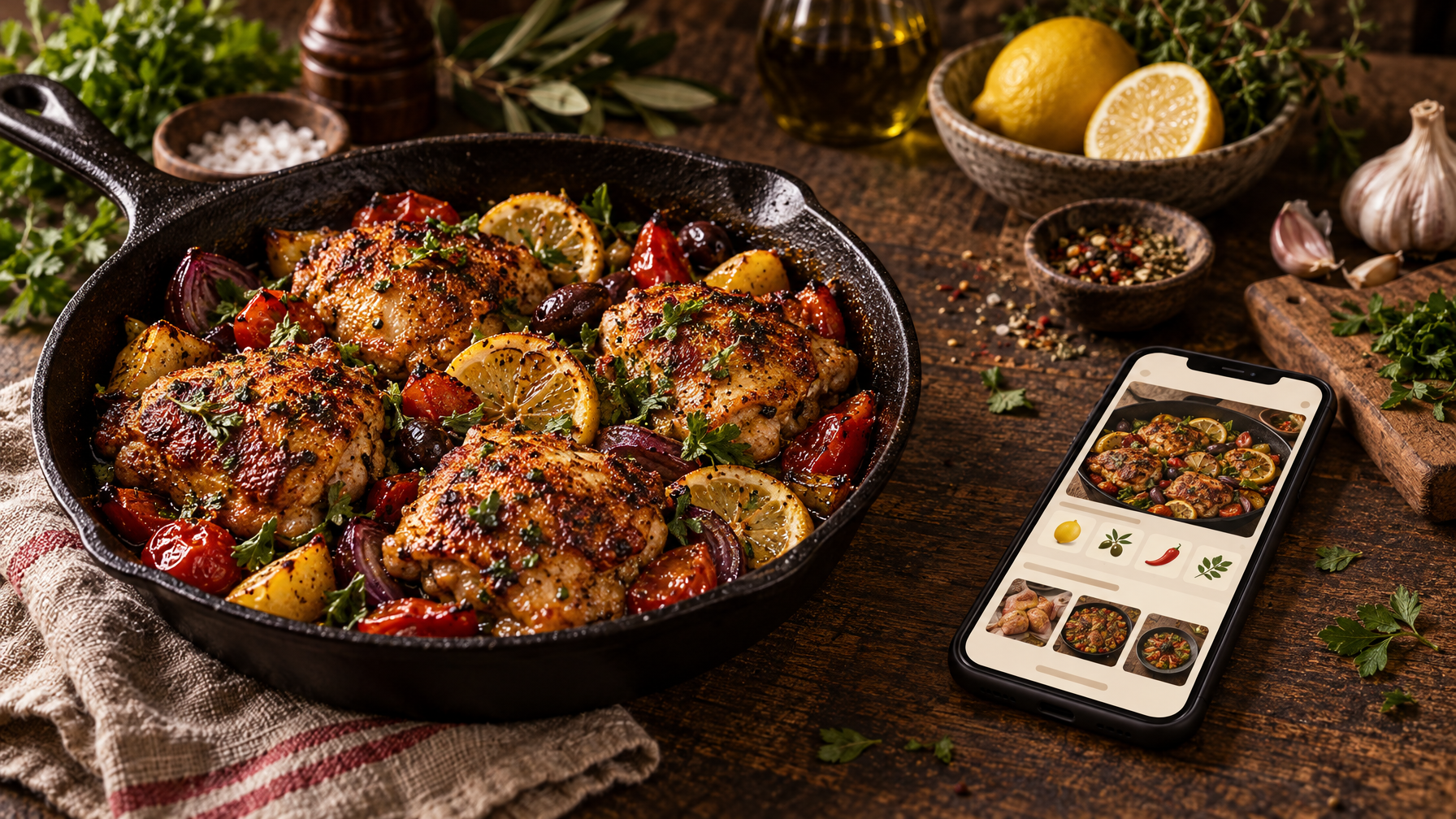
Featured Image: gs://enrichlabs-public-assets/markboutros155-gmail.com/generated-images/8d1f1a3a_image.png
Target Keyword: ai recipe app
Status: Ready to publish
Author: Mark Boutros (FlavourFrontier)
Meta Excerpt: Tired of generic fridge scanners? A 28-year professional chef breaks down how to choose an AI recipe app that understands real diets and UK kitchens.
An AI recipe app is a mobile or web tool that builds cookable, tailored dishes around your constraints rather than making you scroll through a static database of five-star recipe reviews. In 2026, the market splits down the middle: tools that scan your fridge to salvage scraps, tools that scrape social video links into grocery lists, and dedicated culinary engines that tailor whole meals around your household dietary requirements, mood, and schedule.
TLDR: Skip basic leftover chatbots that hallucinate cooking times and ignore cross-contamination. If you cook for a real household with dietary requirements, look for an AI recipe app that locks hard exclusions first, sources sensible UK supermarket ingredients, and treats cooking as a craft. FlavourFrontier lets you dial in your mood, diet, and allergens, then hit Inspire Me for instant culinary inspiration. 18 free recipes every month, no card required, and no account needed to start.
Table of contents
- What is an AI recipe app (and how has it changed in 2026)?
- The four types of AI recipe apps on the market
- Why most generic recipe chatbots fail in a real kitchen
- How to choose the best AI recipe app for your kitchen
- UK cooking reality: allergens, supermarkets, and honest timings
- AI recipe app comparison: feature breakdown
- How to get genuinely delicious food from recipe AI
- Frequently asked questions
- The verdict
What is an AI recipe app (and how has it changed in 2026)?
I have worked as a professional chef for 28 years across the UK, Dubai, Holland, and America. I grew up around line tickets, hot pans, and classic kitchen disciplines. When generative software first arrived in kitchens, most culinary professionals laughed at it. Early recipe generators were notorious for suggesting raw flour in no-bake desserts or pairing mackerel with peanut butter because a predictive text model saw both words in a database.
In 2026, the technology has evolved. A dedicated AI recipe app is no longer just a raw text prompt asking a model for a meal. The best apps combine structured culinary logic with generative intelligence. They understand that cooking is not simply chemistry: it is a balance of fat, acid, salt, texture, and heat.
More importantly, modern apps address the real friction point in home cooking: decision fatigue. Home cooks in Britain rarely struggle because they do not know how to fry an egg or roast a chicken. They struggle because at 6:30 pm on a Tuesday, deciding what to feed four people with conflicting schedules, dairy intolerances, and low energy feels like a second job. An intelligent app acts as a creative co-pilot, handing you an inspiring, realistic idea in thirty seconds flat.
The four types of AI recipe apps on the market
If you search the App Store or Google Play for an AI recipe app, you will encounter dozens of tools claiming to solve dinner. They fall into four distinct categories:
1. Leftover and fridge scanner apps
These apps ask you to type in what is sitting in your vegetable drawer or take a photo of your fridge shelves. They use vision models or ingredient matching to propose a dish using up those specific items.
- Where they shine: Cutting down food waste on a Sunday night when you have half a courgette and a tin of butter beans.
- Where they struggle: Balancing cohesive flavour profiles. A random mix of three leftover veg and a half-jar of curry paste rarely creates a dish you actually look forward to eating.
2. Social video and link extractors
Tools like Pluck or Pestle use artificial intelligence to scrape recipes from TikTok, Instagram Reels, and food blogs, stripping out the creator's ten-minute life story and converting the clip into a clean list of steps.
- Where they shine: Organising viral recipes you saved on social media into a structured folder.
- Where they struggle: Generating new ideas when you have no idea what you want in the first place, or modifying recipes for medical dietary restrictions.
3. General conversational chatbots
Opening ChatGPT, Claude, or Copilot and typing "give me a dinner idea" is where many cooks start.
- Where they shine: Answering technical culinary questions ("why did my béarnaise split?").
- Where they struggle: Consistency. General chatbots lack persistent household profiles, do not format clean UK shopping lists, and easily forget that your partner cannot eat gluten halfway through a response.
4. Culinary constraint and mood engines
This is the category we built FlavourFrontier to lead. Instead of forcing you to audit every onion in your cupboard or type long engineering prompts, you set your household constraints once: dietary requirements, health goals, cook time, and family size. Then, you choose your evening's vibe (Quick & Easy, Comfort Food, Adventurous, Date Night, Budget-Friendly) and let the engine construct a bespoke recipe.
- Where they shine: Daily dinner inspiration for busy homes, strict allergy safety, and expanding your flavour palate.
- Where they struggle: Using up that obscure single tablespoon of miso paste left in your fridge door.
Why most generic recipe chatbots fail in a real kitchen
Cooking is sensory, physical, and governed by heat transfer. When an app treats a recipe as purely text generation without culinary guardrails, three distinct problems appear:
1. The seasoning vacuum
Generic models frequently omit the essential foundational aromatics that build depth. They might instruct you to simmer chopped tomatoes and chicken without gently sweating onions, blooming whole spices in oil, orDeglazing the fond from the bottom of the pan. The result is flat, watery food that tastes like institutional catering.
2. Time dishonesty
Nothing ruins a weeknight faster than an app claiming a meal takes "20 minutes", only for step two to casually demand caramelising three sliced brown onions. Real caramelisation takes thirty minutes of low, patient heat. Professional culinary apps calibrate prep and cook times against actual kitchen workflow.
3. Allergen leakage
My wife is vegetarian and severely dairy-intolerant. In our house, cross-contamination or hidden milk derivatives are not preferences; they cause genuine illness. General-purpose language models often make sloppy errors, such as recommending store-bought pesto (which traditionally contains Parmesan and Pecorino made with animal rennet and dairy) for a dairy-free vegan meal. A dedicated culinary app must enforce hard allergen locks that cannot be bypassed.
How to choose the best AI recipe app for your kitchen
Before you download an app or commit your payment details to a subscription, evaluate it against these five practical criteria:
1. Does it lock allergens by default?
Under UK food law, there are 14 major allergens: celery, cereals containing gluten, crustaceans, eggs, fish, lupin, milk, molluscs, mustard, peanuts, sesame, soybeans, sulphur dioxide/sulphites, and tree nuts. A safe AI recipe app should allow you to toggle off these allergens permanently so no recipe ever surfaces them.
2. Can you try it without a credit card trap?
Too many mobile apps lock their entire interface behind an immediate paywall or force you into a three-day trial that bills £40 annually unless cancelled within 48 hours. Look for transparent pricing. At FlavourFrontier, you can test the app immediately with zero sign-up upfront, generate 18 free recipes every month, and only pay if you decide to upgrade to unlimited meal planning (£6.99 per month).
3. Does it match your mood, not just your leftovers?
Sometimes you have 15 minutes and need a nourishing bowl that satisfies the kids. Other nights you want to spend an hour exploring fragrant North African tagines, vibrant Levantine spices, or a rich Mexican mole. Your recipe tool should cater to how you feel, not just what is expiring.
4. Are the ingredients available in standard UK shops?
There is little value in an app recommending kosher salt, canned biscuits, heavy cream, or specialty regional chilies that no local Sainsbury’s, Tesco, Aldi, or Lidl stocks. Look for an app designed around UK kitchen measurements, grams, and supermarket realities.
5. Does it build a unified shopping list?
Generating five great dinners is only half the battle. If you have to manually copy seventy ingredients onto a paper notepad, you have traded decision fatigue for administrative fatigue. A proper app should compile your selected recipes into an organised shopping list you can take straight into any supermarket aisle.
UK cooking reality: allergens, supermarkets, and honest timings
Building a meal app specifically for the British market requires understanding how we actually cook and shop.
In the UK, grocery prices and energy costs remain front of mind for most families. When you cook dinner on a weeknight, you want ingredients that work double duty: a bag of carrots that contributes to two different meals, spices you can use across multiple regional dishes, and cuts of meat or pulses that do not break the weekly budget.
Furthermore, British kitchens are wonderfully multicultural. We love Thai curries, smoky Spanish stews, Indian daals, Italian pastas, and British comfort classics in equal measure. A great culinary co-pilot should not confine you to boring meat-and-two-veg, nor should it demand obscure culinary equipment like immersion circulators or commercial dehydrators. It should make adventurous home cooking accessible on an ordinary four-ring gas or induction hob.
AI recipe app comparison: feature breakdown
Here is how the leading options compare across key practical features:
| Feature | FlavourFrontier | ChefGPT | DishGen | Generic Chatbot (e.g. ChatGPT) |
|---|---|---|---|---|
| Primary Method | Mood, dietary locks, global flavours | Pantry input & macros | Chat prompt & pantry | Open text conversation |
| Allergen Control | Strict UK 14-allergen exclusion | Dietary filters | Basic keyword prompt | Unreliable prompt memory |
| Free Access | 18 free recipes / month | Very limited free credits | 15 free credits | Free tier available |
| Credit Card Required to Start | No card needed | Often requires account/card | Free account required | Free account required |
| Supermarket Shopping List | Integrated automatic list | Manual export | Built-in list | Text copy-paste only |
| Chef Credibility | Built by 28-yr veteran chef | Tech founder / AI wrapped | Independent dev | AI research lab |
| UK Supermarket Alignment | Yes (Grams, UK naming) | Leans US measurements | Leans US measurements | Variable / mixed |
| Pricing After Trial | £6.99/mo (or ~£5/mo annual) | ~$4.99–$9.99/mo | ~$5.00/mo | $20/mo (Plus) |
How to get genuinely delicious food from recipe AI
Whichever tool you use, artificial intelligence is your co-pilot, not the cook standing over the stove. To turn any digital recipe into a restaurant-worthy dinner, apply these fundamental chef rules:
- Taste at three distinct stages: Taste when your base aromatics are softened, taste midway through cooking, and taste right before taking the pan off the heat. Most flat home-cooked food simply lacks a pinch of salt or an acid lift.
- Finish with brightness: If a generated recipe feels rich or heavy, do not add more spice. Add acidity: a squeeze of fresh lemon juice, a splash of sherry vinegar, or a spoonful of quick-pickled red onions will wake up the entire plate.
- Control your heat: When an app says to brown chicken or sear tofu, ensure the pan is genuinely hot before the food touches it. Crowding a lukewarm pan causes ingredients to steam in their own juices rather than caramelising.
- Treat timings as guides, not laws: Ovens vary, pan thicknesses vary, and fridge temperatures vary. Look for visual cues: golden edges, reduced sauces that coat the back of a spoon, and fragrant aromas filling the kitchen.
Frequently asked questions
What is the best free AI recipe app in the UK?
The best free app depends on your priority. If your goal is using up old items in your cupboard, DishGen or SuperCook provide basic ingredient-matching. If you want chef-crafted meals tailored to dietary requirements, mood, and global cuisines, FlavourFrontier offers 18 free recipes every month with no credit card required to start.
Can an AI recipe app cater to food allergies safely?
Most generic chatbots are unsafe for severe allergies because they can hallucinate ingredients or overlook hidden cross-contaminants. Dedicated culinary platforms like FlavourFrontier enforce strict programmatic exclusion filters covering gluten, dairy, nuts, and other major allergens, preventing hazardous ingredients from appearing in generated suggestions.
Is an AI recipe generator better than a traditional cookbook?
They serve different purposes. Traditional cookbooks are brilliant for deep culinary history, masterclass techniques, and weekend project cooking. An AI recipe app is far superior for weeknight problem-solving: it immediately resolves the dilemma of what to cook when you have 25 minutes, two fussy eaters, and a specific dietary restriction.
Do I need to buy expensive ingredients to use these apps?
No. High-quality recipe apps allow you to toggle on "Budget-Friendly" or "Quick & Easy" options, focusing the generative engine on accessible, cost-effective pantry staples and fresh British produce easily found at your nearest supermarket.
The verdict
Technology in the kitchen should never replace the joy of cooking. It should eliminate the mental drag of planning, the stress of accommodating complicated diets, and the boredom of eating the same five meals on repeat.
If you are ready for dinner inspiration that respects your schedule, your tastebuds, and your household dietary requirements, give FlavourFrontier a spin.
Try it free today, 18 recipes every month, no card required: app.flavourfrontier.co.uk
Leave a Reply