Lactose Intolerance Meal Plan: A Chef's Guide to 7 Days of Real Food (UK 2026)
A lactose intolerance meal plan should never feel like clinical punishment or a catalogue of bland, processed dairy substitutes. Planning around low lactase activity means removing dairy sugar while keeping genuine culinary richness, proper sear, vibrant acid, and satisfying textures.
TLDR: Living without lactose does not require living on beige food or expensive ultra-processed "free-from" cheese. A sensible 7-day plan leans heavily on naturally dairy-free global cuisines (Mediterranean olive oil braises, Southeast Asian coconut broths, Latin American citrus marinades) alongside naturally low-lactose aged cheeses where individual tolerance allows. Use FlavourFrontier to dial in your household dietary constraints and generate tailored dinners in 30 seconds. 18 free recipes every month, no card required, and no account needed upfront.
Table of contents
- Lactose intolerance vs cow's milk protein allergy
- The five culinary rules of cooking without lactose
- Naturally low-lactose vs high-lactose dairy
- Hidden lactose in UK supermarket ingredients
- The complete 7-day UK lactose intolerance meal plan
- Essential chef pantry swaps
- Frequently asked questions
- The verdict: build your weekly plan without compromise
Lactose intolerance vs cow's milk protein allergy
Before planning a single meal, you must understand what your digestive system is reacting to. In professional kitchens, confusing an intolerance with an allergy is an operational error.
| Factor | Lactose Intolerance | Cow's Milk Protein Allergy (CMPA) |
|---|---|---|
| Underlying mechanism | Digestive deficiency (low lactase enzyme production) | Immune system reaction (IgE or non-IgE mediated) |
| What triggers symptoms | Milk sugar (lactose disaccharide) | Milk proteins (casein and whey fractions) |
| Dose sensitivity | Variable; many adults tolerate 10-12g lactose spread through a day | Strict; minute traces can trigger hives, swelling, or anaphylaxis |
| Safe ingredients | Hard aged cheeses (Parmesan, mature Cheddar), ghee, lactose-free milk | Zero dairy products of any kind, including butter and lactose-free dairy |
| UK regulatory status | Dietary consideration (not an immune allergen) | Regulated under the UK 14 Major Food Allergens |
If you are cooking for someone with a diagnosed milk allergy, you cannot use mature Cheddar or butter. If you are dealing with lactose intolerance, you have significantly more culinary freedom because hard aged cheeses have their lactose consumed by lactic bacteria during fermentation.
The five culinary rules of cooking without lactose
I spent 28 years cooking on commercial lines in Britain, Dubai, Holland, and the United States. My wife is dairy-intolerant and vegetarian. When you cook dinner every evening for someone whose digestion cannot handle lactose, you quickly learn where home cooks stumble.
1. Build richness with fat, not cream
Heavy cream and mascarpone are easy crutches in Western cooking. When you take them away, you cannot simply replace them with water. Replace them with high-quality extra virgin olive oil, cold-pressed rapeseed oil, tahini, toasted sesame paste, or emulsified pan juices.
2. Double down on acid
Dairy coats the palate and masks unseasoned food. When you remove dairy from a dish, every flavour element becomes sharper. A finishing squeeze of fresh lemon, a dash of sherry vinegar, or quick-pickled red onions lifts a dish and compensates for the missing dairy tang.
3. Lean on naturally dairy-free global cuisines
Trying to cook classic French or Northern Italian food without dairy requires endless workarounds. Shift your repertoire towards cuisines that never relied on cow's milk disaccharides:
- Southern Italian and Spanish: Olive oil, tomatoes, garlic, legumes, anchovies, and fresh herbs.
- Levantine and Middle Eastern: Hummus, baba ganoush, pomegranate molasses, sumac, and spiced lamb or pulses.
- Thai and Vietnamese: Coconut milk, lemongrass, galangal, lime, and fish sauce.
4. Watch for calcium and mineral balance
When removing liquid dairy from a weekly rotation, look at calcium sources across whole foods. Canned sardines with soft bones, dark leafy greens (kale, spring greens, cavolo nero), firm tofu set with calcium sulphate, and fortified plant milks keep your nutritional baseline intact without needing chalky supplements.
5. Cook one meal for the entire table
The fastest path to kitchen burnout is cooking separate pots for separate plates. A great lactose intolerance meal plan is not "special food for the sensitive person." It is food so good that everyone at the table eats it without noticing what was left out.
Naturally low-lactose vs high-lactose dairy
The UK National Health Service (NHS) and the British Dietetic Association (BDA) note that most people with primary lactase deficiency can tolerate small quantities of lactose without symptoms, especially when consumed alongside meals containing fibre and fat.
Safe or trace lactose (<0.1g to 0.5g lactose per 100g)
- Aged hard cheeses: Parmigiano Reggiano (aged 24+ months), authentic Pecorino Romano, mature British Cheddar (aged 12+ months), Manchego, Gruyère, Comté.
- Cultured fats: Traditional clarified butter (ghee) has virtually all water and milk solids removed.
- Lactose-free certified dairy: Whole milk, cream, and Greek yogurt treated with lactase enzymes (readily available in UK supermarkets like Tesco, Sainsbury's, and Waitrose).
High lactose to avoid completely (>3g to 10g lactose per 100g)
- Standard fresh cow's milk (skimmed, semi-skimmed, whole)
- Evaporated milk and condensed milk
- Fresh soft cheeses (ricotta, cottage cheese, mascarpone, quark)
- Ice cream and custard
- Milk chocolate
Hidden lactose in UK supermarket ingredients
Lactose is widely used as a cheap bulking agent, carrier, and browning aid across processed supermarket foods. Under UK food labelling regulations, milk and milk-derived components must be highlighted in bold within the ingredients list.
Look out for these terms on UK packaging:
- Whey and whey powder: Common in commercial burger buns, sliced sandwich bread, and breakfast cereals.
- Casein, caseinate, calcium caseinate: Frequently added to processed meats, sausages, and protein snacks.
- Milk powder or skimmed milk solids: Often found in instant soups, seasoning packets, and ready-made sauces.
- Flavoured crisps: Pre-packaged seasonings (especially salt & vinegar, cheese & onion, and barbecue) routinely use whey powder as a flavour carrier.
- Processed meats: Cheap deli ham and frankfurters often use milk proteins to retain water.
If you want complete confidence in what is going on your plate, cook from whole ingredients. Use FlavourFrontier to generate creative, whole-food recipes designed around your exact kitchen profile.
The complete 7-day UK lactose intolerance meal plan
Here is a practical, chef-crafted 7-day meal plan designed for UK households. Every recipe uses easily accessible supermarket ingredients from Tesco, Sainsbury's, Morrisons, Aldi, or Lidl.
Monday: The Fresh Start
- Breakfast: Spiced cinnamon porridge cooked with unsweetened oat milk, topped with toasted pumpkin seeds, chia seeds, and sliced banana.
- Lunch: Mediterranean chickpea salad with crisp cucumber, cherry tomatoes, Kalamata olives, fresh parsley, extra virgin olive oil, and lemon juice.
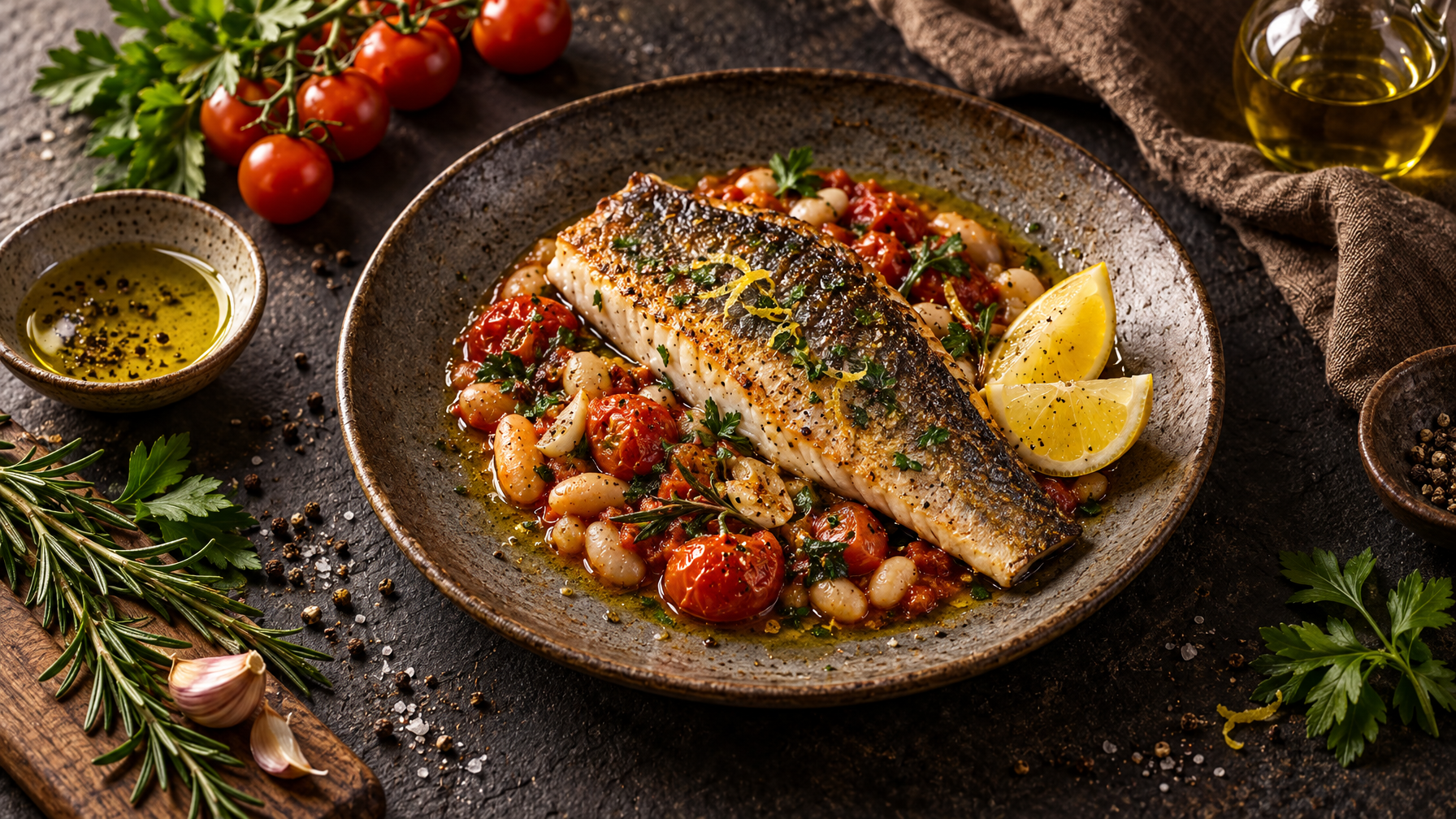
- Dinner: Pan-seared sea bass fillet over a warm stew of slow-cooked cannellini beans, blistered cherry tomatoes, garlic, and fresh rosemary.
Tuesday: Spanish Comfort
- Breakfast: Traditional Pan con Tomate: crusty sourdough rubbed with ripe tomato pulp, a touch of crushed garlic, flaky sea salt, and good olive oil.
- Lunch: Leftover cannellini beans and sea bass or a quick egg and spinach scramble with olive oil.
- Dinner: Smoky chicken thigh and butter bean traybake with sweet bell peppers, red onions, garlic cloves, and smoked Spanish paprika.
Wednesday: Plant-Forward Fibre
- Breakfast: Smoothie bowl made with frozen berries, a handful of spinach, unsweetened almond or soya milk, and ground flaxseed.
- Lunch: Spiced red lentil dal with wilted spinach, fresh coriander, and warm corn tortillas or basmati rice.
- Dinner: Roasted cauliflower steaks topped with a creamy lemon-garlic tahini sauce, pomegranate seeds, and toasted pine nuts, served alongside warm quinoa.
Thursday: Quick Weeknight Heat
- Breakfast: Sourdough toast with sliced avocado, soft poached eggs, chilli flakes, and a squeeze of lime.
- Lunch: Quinoa, roasted cauliflower, and rocket salad with remaining lemon tahini dressing.
- Dinner: Fragrant coconut milk chicken and sweet potato curry with kaffir lime leaves, fresh ginger, and jasmine rice.
Friday: Weekend Kickoff
- Breakfast: Coconut yogurt pot layered with fresh blackberries, gluten-free oats, and a drizzle of wildflower honey.
- Lunch: Sourdough sandwich with smoked salmon, sliced cucumber, dill, and a light spread of dairy-free Dijon mayonnaise.
- Dinner: Grass-fed British ribeye or sirloin steak cooked in olive oil, served with rosemary roasted potato wedges and a punchy Argentine chimichurri (parsley, oregano, garlic, red wine vinegar, olive oil).
Saturday: Batch Cooking & Leisure
- Breakfast: Shakshuka: baked eggs gently poached in a rich sauce of stewed peppers, onions, cumin, and plum tomatoes, served with crusty sourdough.
- Lunch: A bowl of homemade vegetable minestrone soup cooked with vegetable broth, kale, courgettes, carrots, and gluten-free pasta (skip the Parmesan rind).
- Dinner: Slow-braised beef brisket or lamb shoulder with carrots, thyme, and red wine, served over a silky olive oil and roasted garlic potato mash.
Sunday: The Traditional Roast (Reimagined)
- Breakfast: English breakfast scramble: eggs cooked in a dash of olive oil, grilled field mushrooms, grilled tomatoes, and clean allergen-friendly butcher sausages.
- Lunch: Light bowl of leftover minestrone soup.
- Dinner: Whole roasted herb chicken (using cold-pressed rapeseed oil or traditional ghee) with crisp roast potatoes, glazed carrots, steamed seasonal greens, and a rich red wine pan gravy made without butter.
Essential chef pantry swaps
Do not fill your kitchen cupboards with over-engineered imitation foods that taste of vegetable gums. Keep these genuine culinary staples on hand:
| Traditional Dairy Item | What People Usually Try | The Chef-Recommended Swap | Why It Works Better |
|---|---|---|---|
| Butter for searing | Commercial dairy-free spread | Cold-pressed rapeseed oil or traditional Ghee | Higher smoke point; no foaming or water splatter; rich finish |
| Double cream in sauces | Soya cream cartons | Coconut milk (for curries) or blended soaked cashews (for pasta) | Natural fats emulsify smoothly without artificial curdling |
| Parmesan on pasta | Nutritional yeast flakes | Authentic 24-month Parmigiano Reggiano (if tolerated) or toasted garlic breadcrumbs | Real fermented depth; crispy breadcrumbs provide the essential crunch and salt |
| Milk for baking/sauces | Sweetened almond milk | Unsweetened barista oat milk | Higher fat and protein content behaves closely to dairy milk in cooking |
| Sour cream or yogurt | Ultra-processed faux creams | Unsweetened coconut yogurt seasoned with lemon juice and salt | Clean acidity with proper fat balance for dips and marinades |
Frequently asked questions
Can I eat mature Cheddar if I am lactose intolerant?
Yes, in almost all cases. The cheese-making process drains away the liquid whey (where most lactose resides), and the remaining lactose is consumed by bacteria as the cheese ages. Look for Cheddars matured for 12 months or longer, which typically contain under 0.1g of lactose per 100g.
Is butter safe on a lactose-free meal plan?
Butter contains only trace amounts of lactose (around 0.5g to 0.8g per 100g) because it consists mostly of butterfat. Many people with mild to moderate intolerance handle butter in normal cooking without symptoms. If you are highly sensitive, clarified butter (ghee) or cold-pressed olive and rapeseed oils are zero-lactose alternatives.
How do I get enough calcium without dairy products?
Eat foods rich in bioavailable calcium: canned oily fish with bones (sardines, pilchards, salmon), dark leafy vegetables (collards, kale, broccoli), calcium-set firm tofu, dried figs, and calcium-fortified plant milks.
Are lactose-free milks healthy?
Yes. Commercial lactose-free cow's milk is standard milk treated with lactase enzymes to split lactose disaccharides into glucose and galactose. It retains the same protein, calcium, and mineral profile, though it may taste slightly sweeter on the palate.
The verdict: build your weekly plan without compromise
Cooking for lactose intolerance does not mean sacrificing flavour, giving up your favourite weekend dinners, or spending hours deciphering supermarket labels. By grounding your weekly routine in whole foods, natural healthy fats, and bold culinary seasoning, you can eat better than most people relying on heavy cream and pre-made sauces.
If you are tired of spending your Sunday evenings staring at a blank notebook trying to plan dinner around conflicting household diets, let technology do the heavy lifting.
With FlavourFrontier, you select your mood, dial in your dietary exclusions, and hit Inspire Me for immediate, chef-crafted recipes tailored to your kitchen.
Try it free, 18 recipes every month, no card needed: app.flavourfrontier.co.uk
Leave a Reply